
How to Remove Soap Scum From Shower Glass?
Glass shower doors and enclosures can instantly make a bathroom feel open, bright, and luxurious. However, within just a few weeks of daily use, that crystal-clear glass can transform into a cloudy, dull surface covered in a stubborn white film. That hazy layer is soap scum—a sticky compound formed when soap fats react with minerals in your tap water.
Scrubbing away hardened buildup with standard window cleaner rarely works. Eliminating soap scum requires breaking down its chemical bond using the right methods, safe tools, and targeted cleaning agents.
Quick answer: the safest way to remove soap scum
- Use the right cleaner, let it dwell, scrub gently, and rinse well: Apply an acidic cleaner (like a 1:1 mixture of warm white vinegar and water, or a specialized bathroom cleaner) to break down the alkaline soap residue. Allow it to sit for 10 to 15 minutes, scrub gently with a non-scratch pad, and rinse thoroughly.
Soap scum vs. hard water stains
What soap scum looks like
Soap scum appears as a chalky, cloudy, or smeary white film that feels slightly textured, waxy, or rough to the touch. It accumulates primarily in the middle and lower sections of shower glass where body soap splashes.
What hard water stains look like
Hard water stains (calcium and magnesium spots) appear as translucent, circular ring marks or mineral crusts left behind after water droplets evaporate.
Mineral deposits vs. mildew
While soap scum and hard water stains result from water chemistry, mildew thrives in damp environments as black, pink, or gray patches along silicone seals and frame corners.
What etched glass means and why it may not come off
If mineral deposits or soap scum are left uncleaned for months or years, the alkaline and mineral reaction can physically pit or etch the microscopic pores of the glass. Once glass is truly etched, no amount of cleaning will restore it, as the texture is permanent structural damage.
Best tools for cleaning shower glass
Non-scratch sponge
A standard cellulose sponge or microfiber-backed scrubbing pad safely lifts softened residue without risking surface damage.
Microfiber cloth
Essential for buffing the glass completely dry at the end of the cleaning process to eliminate water spots.
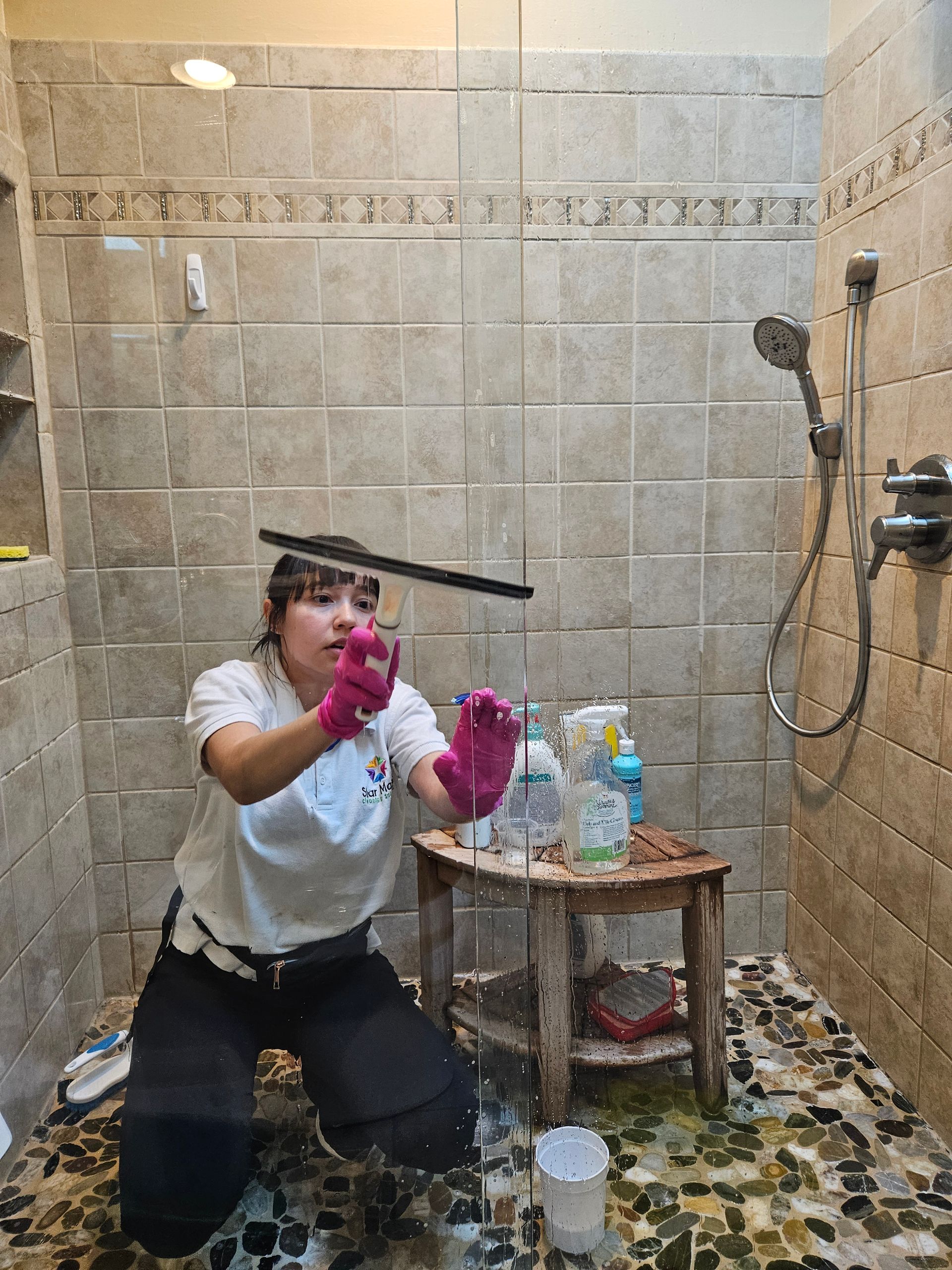
Squeegee
A rubber-bladed handheld squeegee is the ultimate tool for wiping away sheets of water immediately after a shower.
Tools that can scratch glass
Never use steel wool, metal razor blades (unless handled flat for localized paint/caulk removal), stiff wire brushes, or highly abrasive scouring powders on standard shower glass, as they will leave permanent scratches.
Step-by-step soap scum removal method
Ventilate the bathroom
Turn on your exhaust fan or crack the bathroom window to maintain airflow, especially if you are using vinegar or potent commercial chemical sprays.
Apply cleaner à the affected areas
Spray your cleaning solution (such as equal parts warm white vinegar and a drop of dish soap, or a commercial soap scum remover) generously over the glass doors, ensuring complete coverage from top to bottom.
Allow enough dwell time
Let the cleaner sit undisturbed for 10 to 15 minutes. This dwell time is critical: the acid needs time to chemically penetrate and dissolve the alkaline soap bonds. Do not let the solution dry out completely.
Scrub gently in sections
Using a non-scratch sponge, work in systematic circular motions starting from the top of the glass and moving downward.
Rinse and dry the glass
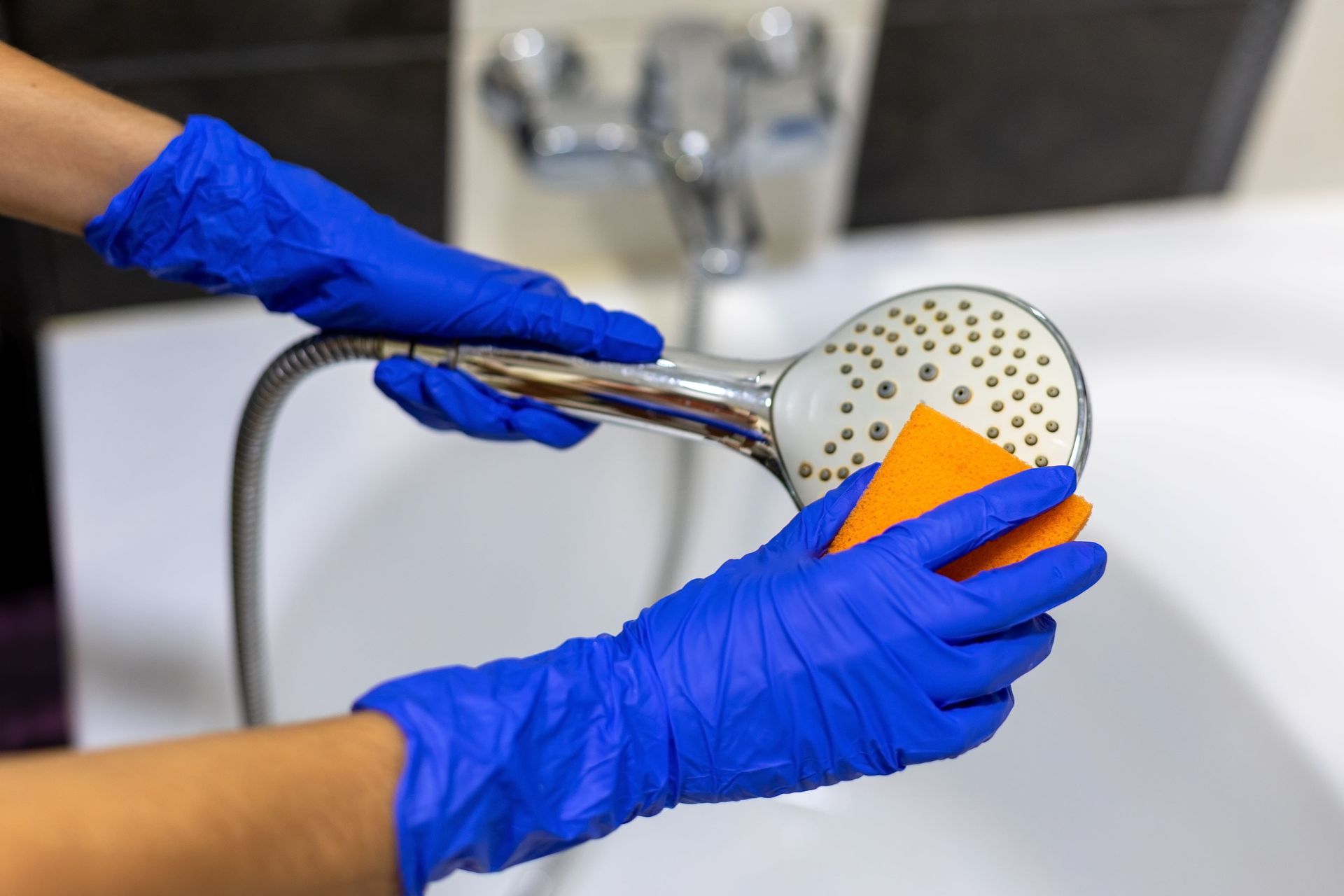
Rinse the door thoroughly with warm water (using a detachable shower head if available), then immediately dry and buff the glass with a clean microfiber towel.
How to handle buildup near tracks and edges
Scum and mold love to hide in the bottom door tracks and frame corners. Apply your cleaning solution, let it soak, and use an old soft toothbrush or narrow utility brush to agitate grime out of tight metal joints.
How to prevent soap scum from returning
Daily squeegee habit
Make it a rule for household members to run a rubber squeegee down the glass walls immediately after finishing a shower. This takes less than 30 seconds and removes 90% of the water and soap residue before it can dry and harden.
Switching products and improving ventilation
Consider switching from traditional bar soap (which contains animal fats and talc that create heavy soap scum) to liquid body washes. Additionally, running your bathroom exhaust fan during and for 20 minutes after showers reduces humidity and slows mineral buildup.
When professional bathroom cleaning helps
Deep cleaning for shower glass, tile, and fixtures
If years of neglected mineral crust and stubborn soap scum have turned your shower glass completely opaque, DIY remedies can require exhausting physical effort. Partnering with a professional team like Star Maids Cleaning Solutions ensures your entire bathroom—from glass enclosures to tiled walls and hardware fixtures—is meticulously restored to a pristine shine.
Ready to enjoy crystal-clear shower glass without the grueling scrubbing?
Click here to get your custom quote from Star Maids Cleaning Solutions today!
FAQ
What dissolves soap scum on shower glass?
Acidic cleaners—such as white vinegar, lemon juice, or commercial cleaners containing citric or oxalic acid—effectively dissolve soap scum because they neutralize its alkaline, fat-based chemical structure.
Is vinegar safe for shower glass?
Yes. White vinegar is completely safe for glass surfaces and acts as a natural, mild acid that breaks down hard water spots and soap buildup without harming the glass.
How do you prevent soap scum?
The best way to prevent soap scum is by squeegeeing the glass after every shower, switching from bar soap to liquid body wash, and wiping the enclosure down weekly with a mild cleaner.
Can hard water permanently stain shower glass?
Yes. If hard water minerals and soap scum are allowed to sit for extended periods, they can chemically etch the glass surface, creating permanent cloudy damage that cannot be washed away.