
How to Clean a Glass Stove Top Without Scratching It?
Smooth ceramic-glass cooktops lend a sleek, modern look to any kitchen, but burnt-on grease, boiled-over starch, and cloudy rings can quickly dim their glossy shine. Learning how to clean glass stove top surfaces safely requires nonabrasive tools and cleaning formulas specifically formulated for smooth cooktop glass. Using harsh steel wool, scouring powders, or improper scraping tools can permanently scratch, pit, or dull the tempered ceramic-glass surface.
It is important to distinguish cleaning a smooth glass cooktop from servicing other kitchen areas. While this guide addresses the top cooking surface, managing an entire kitchen involves different techniques—such as knowing how to handle interior oven cavities using our guide on oven cleaning methods or maintaining surrounding metallic finishes with our guide on cleaning stainless steel appliance fronts.
What Is the Best Way to Clean a Glass Stove Top?
The best way to clean a glass stove top is to wait until the surface is completely cool, sweep away loose food crumbs, apply a small amount of a manufacturer-approved cooktop cleaning cream (such as Cerama Bryte®), rub gently in circular motions using a non-scratch cleaning pad designed for glass cooktops, wipe away residue with a damp microfiber cloth, and buff dry with a soft towel.
Know Your Cooktop Surface Before You Clean
Whether your appliance uses radiant electric elements under glass or advanced induction technology, the top surface is constructed from a smooth ceramic-glass composite engineered to withstand high heat. However, different marks on the glass require different corrective steps:
Raised Crust / Rings
- Visual Description: Dark, textured rings surrounding cooking zones.
- Likely Underlying Cause: Burnt-on grease, boiled-over sauces, or carbonized food.
- Approved Action Plan: Apply cooktop cleaning cream with a non-scratch pad; use an approved scraper if permitted.
Cloudy / Iridescent Film
- Visual Description: Hazy, rainbow-like sheen across burner areas.
- Likely Underlying Cause: Hard-water mineral deposits or unrinsed cleaner residue.
- Approved Action Plan: Clean thoroughly with cooktop cream; buff dry with a clean, dry microfiber towel.
Metallic Gray Smears
- Visual Description: Silver or shiny gray streaks flat against the glass.
- Likely Underlying Cause: Metal transfer from sliding aluminum or copper cookware.
- Approved Action Plan: Clean immediately with cooktop cream before reheating the burner.
Deep Gouges / Chips
- Visual Description: Indented lines or missing glass flecks felt with a fingernail.
- Likely Underlying Cause: Dragging cast iron, dropping heavy pots, or sugar pitting.
- Approved Action Plan: Cannot be repaired by cleaning. Requires cooktop glass replacement.
What You Need for Safe Cooktop Cleaning
Before starting, gather nonabrasive, surface-safe supplies:
- Approved Cleaning Cream: Formulated specifically for glass-ceramic cooktops to lift grease without micro-scratching.
- Non-Scratch Cleaning Pads: Synthetic scrubbing pads rated explicitly for smooth glass cooktops.
- Microfiber Cloths: Soft, lint-free towels for wiping and buffing.
- Approved Single-Edge Razor Scraper: Optional safety-handle scraper (only if explicitly authorized by your owner's manual).
Avoid abrasive scouring powders, green scrubbing sponges, steel wool, oven cleaners, and generic household razor blades without protective handles.
Step-by-Step Glass Stove Top Cleaning
Follow this safe, numbered procedure after everyday cooking:
[ Safe Glass Cooktop Cleaning Process ]
1. Turn Off & Cool Completely ──> 2. Sweep Away Loose Grit
│
▼
4. Wipe Damp & Buff Dry <── 3. Rub Approved Cream
(Non-scratch pad)
1. Turn Off the Cooktop and Let It Cool
Routine cleaning must always be performed on a completely cold cooktop to prevent cleaning chemicals from burning, releasing fumes, or baking into the glass.
- Urgent Spill Exception: High-sugar spills (like jam, syrup, or jelly) and melted plastic wrap require immediate action while warm to prevent permanent glass pitting or bonding (refer to GE Appliances' glass cooktop care guide). Put on heavy oven mitts and carefully scrape molten sugar off the warm burner onto a cooler surface using your approved cooktop scraper as directed by your manual.
2. Remove Loose Grit Before Wiping
Use a dry microfiber cloth to sweep away loose crumbs, salt, and dry debris. Dragging hard salt granules or food grit under a damp pad will scratch the smooth glass finish.
3. Apply a Small Amount of Approved Cleaner
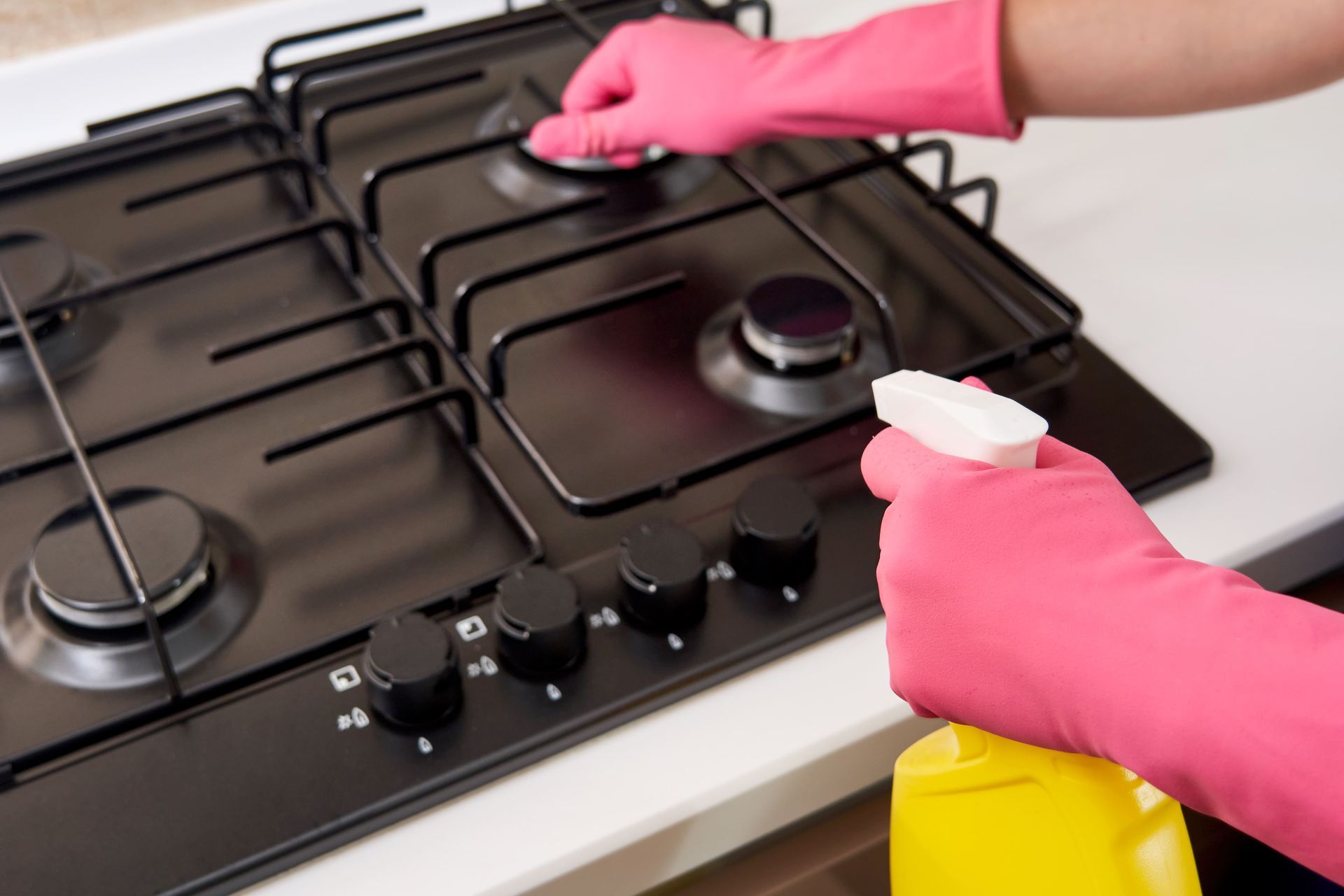
Shake your glass cooktop cleaning cream well. Apply a dime-sized drop directly to cool, affected cooking zones. Using a non-scratch cooktop pad, rub the cleaner in small circular motions to break down grease and mineral film.
4. Treat Burnt-On Spots Without Force
For stubborn carbonized crusts that do not lift with a pad, reapply a small dab of cleaner to keep the area lubricated.
When a Cooktop Scraper Is Allowed
If your manufacturer's manual permits a razor scraper, hold a single-edge razor blade secured in a safety handle at a low 45-degree angle against the cool glass. Apply light, steady forward pressure to shave away the raised crust. Never hold the blade vertically at a 90-degree angle or use blade corners, as digging into the glass will chip the surface.
5. Remove Cleaner Residue and Buff Dry
Wipe away loosened cleaning paste using a clean cloth dampened with water. Follow up immediately by buffing the surface with a fresh, dry microfiber towel until the glass shines without streaking. Leaving cleaning paste on a cooktop causes it to bake into a cloudy film during your next cooking session.
Mistakes That Can Damage Glass Cooktops
Avoid these common habits that compromise ceramic-glass durability:
- Using Abrasive Scouring Pads: Green scouring pads contain aluminum oxide particles that scratch smooth glass finishes.
- Applying Household Oven Cleaner: Caustic oven sprays pit glass-ceramic materials and release harsh fumes when heated.
- Exerting Excessive Downward Pressure: Pressing hard on a scraper or pad grinds grit into the glass.
- Sliding Heavy Cookware: Dragging rough cast iron or dirty pan bottoms across burners causes permanent surface scratches.
Can You Remove Cloudy Marks or Scratches?
According to appliance repair standards (such as GE Appliances' cooktop scratch guidelines), it is vital to separate removable surface residue from permanent glass damage:
- Removable Marks: Cloudy mineral rings, unrinsed soap film, and light aluminum transfers sit on top of the glass and can be cleaned away with approved cooktop cream.
- Permanent Damage: Deep scratches, pitted spots caused by cooled sugar, and gouges represent physical loss of glass material. No cleaner, polish, or DIY toothpaste trick can repair deep scratches. Attempting to buff out scratches with abrasive polishes will only dull the surrounding glass.
A Maintenance Routine for Frequent Cooking
Keep your cooktop looking pristine during busy cooking weeks with simple daily care:
- Wipe Pan Bottoms: Check pot and pan bottoms before cooking; wipe off grease or trapped grit.
- Post-Meal Wipe Down: Once burners cool after dinner, wipe away light oil splatters with a damp microfiber cloth before they bake into tough crusts.
Get Help With the Rest of Your Kitchen
Keeping your entire kitchen spotless—from smooth cooktops and countertops to sanitized sinks, cabinet fronts, and floors—requires consistent time and care. Star Maids Cleaning Solutions provides premier residential housekeeping for homeowners across Montgomery and Howard County, Maryland.
Please note that while our professional team delivers exceptional surface wiping, counter sanitization, and routine kitchen care, our standard residential scope focuses on general home maintenance. Specific appliance detailing (such as cooktop razor scraping or deep interior appliance care) should be confirmed when arranging your written service agreement.
Looking for dependable support to keep your living spaces fresh? Contact Star Maids Cleaning Solutions today to learn more about our residential kitchen cleaning services and request a free estimate!
Frequently Asked Questions
Can you use glass cleaner on a glass stove top?
Not recommended. Standard window glass cleaners (like Windex®) contain ammonia or alcohol, which can evaporate rapidly on hot surfaces or leave chemical films that bake into cloudy stains when the burners are turned on. Always use a dedicated glass-ceramic cooktop cleaning cream.
Is a razor scraper safe on every cooktop?
Only if your specific appliance owner's manual explicitly permits it and you use a single-edge blade secured in a safety handle held at a 45-degree angle against cool glass. Never use unapproved utility knives or hold blades vertically.
How do you remove burnt food without scratching the top?
Soften the burnt food by applying an approved cooktop cleaning cream and letting it sit for several minutes. Gently rub with a non-scratch cooktop pad. For raised crusts, use a manufacturer-approved safety razor scraper held flat at 45 degrees.
Why does my cooktop look cloudy after cleaning?
Cloudiness usually stems from unrinsed cleaning cream residue or hard-water mineral deposits. Wipe the surface again with a clean, damp microfiber cloth to remove all product film, then buff dry with a towel.
Can cleaning remove deep cooktop scratches?
No. Scratches are physical gouges in the ceramic-glass material, not surface dirt. Cleaning products can remove metallic streaks that mimic scratches, but actual scratches cannot be buffed out or repaired with cleaners.