
How to Clean Stove Grates and Remove Burnt-On Grease?
Gas stove grates endure high heat, cooking splatters, and heavy cookware daily. Over time, grease bakes onto the metal surface, forming a thick, tacky, or carbonized crust that soap and a quick wipe cannot remove. Learning how to clean stove grates safely requires matching your cleaning method to the exact grate material—whether matte cast iron, glossy porcelain-enamel, or steel. Using harsh abrasives or improper soaking techniques can strip protective coatings, cause bare cast iron to rust, or compromise the stability of your stovetop.
It is equally important to keep grate maintenance separate from other appliance tasks. While this guide addresses removable gas grates, cleaning internal oven cavities and racks requires a different approach, as explained in our guide on how to clean an oven.
How Should You Clean Stove Grates?
The safest way to clean stove grates is to wait until the gas cooktop is completely cool, remove the grates onto a protected surface, identify whether they are enameled metal or raw cast iron, hand-wash them using warm water and a mild grease-cutting dish soap with a soft nylon brush, and dry them completely before reassembling. Never use self-cleaning oven cycles or harsh chemical soak bags unless explicitly authorized by the manufacturer's manual.
Identify Your Grates Before Choosing a Method
Different stove manufacturers use different materials and surface finishes for their grates. Compare your cooktop components against this material guide before applying water or cleaning solutions:
Porcelain-Enameled Metal
- Visual Appearance & Finish: Smooth, glossy or semi-gloss black/dark finish over metal.
- Soaking Eligibility: Allowed (Short Soak)
- Recommended Cleaning Method: Soak in warm water with mild liquid dish soap; scrub with a soft nylon brush.
- What to Avoid: Abrasive steel wool, metal scrapers, abrasive powders, self-cleaning oven cycles.
Coated Cast Iron
- Visual Appearance & Finish: Heavy, textured matte black finish with a thin protective coat.
- Soaking Eligibility: Allowed (Controlled)
- Recommended Cleaning Method: Hand-wash with warm soapy water; use a baking soda paste for stubborn spots.
- What to Avoid: Prolonged overnight soaking, dishwasher washing, harsh commercial oven sprays.
- Uncoated / Bare Cast Iron
- Visual Appearance & Finish: Heavy, rough, dark gray or black porous iron metal.
- Soaking Eligibility: NOT Allowed (No Soaking)
- Recommended Cleaning Method: Scrub with a barely damp nylon brush; dry immediately and re-season lightly if recommended.
- What to Avoid: Soaking in sink water, dishwasher cycles, leaving to air-dry (causes rapid rust).
Coated and Enameled Grates
Porcelain-enamel coatings seal the underlying metal, making the grates resistant to grease absorption. However, enamel can chip or crack if grates are dropped or scrubbed with metal tools. Once enamel chips, moisture penetrates to the bare metal underneath, leading to hidden corrosion.
Bare Cast Iron Grates
Uncoated or bare cast iron grates are porous and absorb moisture rapidly. Soaking bare cast iron in a sink full of water strips its seasoning and triggers immediate flash rust. Always wash bare cast iron quickly, dry it thoroughly with a towel, and never place it in an automatic dishwasher.
Step-by-Step Grate Cleaning
Follow this material-safe, step-by-step procedure to remove grease from removable gas stove grates:
[ Material-Safe Grate Cleaning Process ]
1. Cool & Place on Protected Surface
│
▼
2. Brush Away Loose Crumbs & Grease
│
▼
3. Hand-Wash / Short Soak (Warm Soapy Water)
│
▼
4. Rinse & Towel-Dry Completely Before Reinstalling
1. Cool the Stove and Protect the Counter
Ensure all gas burners are switched off and the grates are completely cold to the touch. Heavy iron grates can scratch delicate countertop materials like quartz, granite, or laminate. Lay down a thick bath towel or cardboard on your counter or sink bottom before setting the grates down.
2. Remove Loose Food and Grease
Use a dry, soft-bristled nylon brush or microfiber cloth to sweep away loose crumbs, dry food grit, and light surface dust before introducing water.
3. Use a Permitted Soak or Gentle Handwash
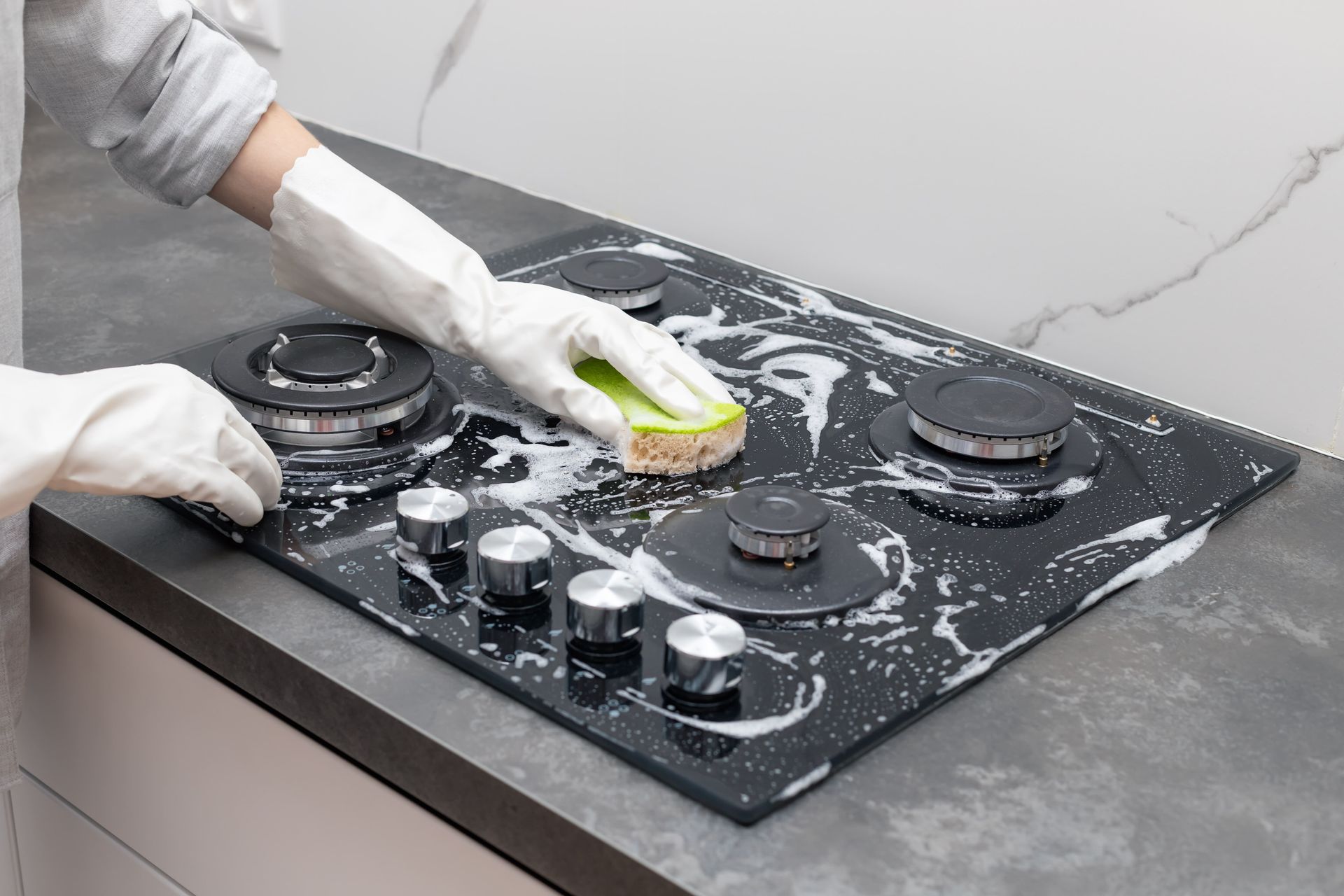
- For Enameled & Coated Grates: Fill your sink or a large basin with warm water and 2 to 3 tablespoons of heavy-duty, grease-cutting liquid dish soap. Submerge the grates and let them soak for 15 to 20 minutes to soften carbonized grease. Scrub gentle circular passes with a soft nylon brush or non-scratch sponge.
- For Stubborn Baked-On Spots: Create a paste using 3 parts baking soda and 1 part warm water. Apply the smooth paste to carbonized grease patches, let it sit for 10 minutes, and scrub gently with a nylon brush.
- For Bare Cast Iron: Do not soak. Wipe the grates with a cloth dampened with warm, soapy water, scrub spots with a stiff nylon brush, and rinse immediately.
Check the Dishwasher Exception
Always consult your specific appliance owner's manual regarding dishwasher permission (refer to Whirlpool's cooktop care guidelines). While some manufacturers approve dishwasher cycles for specific porcelain-enameled grates, the high heat, harsh detergents, and prolonged exposure to moisture can cause discoloration, white chalky residue, and enamel damage. Furthermore, burner grates and burner caps are not interchangeable—small gas burner caps often have delicate brass or aluminum underside fitment rings that discolors or corrodes in a dishwasher.
4. Rinse and Dry Before Reinstalling
Rinse the grates thoroughly under clean running water to remove all soap film and dissolved grease slurry. Towel-dry the grates immediately with a clean towel. Inspect the undersides and feet—where rubber bumpers attach—to ensure no moisture remains trapped before placing them back onto the cooktop.
What Not to Do With Stove Grates
Protect your stove components and home safety by avoiding these common cleaning hazards:
- Never Put Grates in a Self-Cleaning Oven: High self-cleaning temperatures (exceeding 800°F) will warp metal grates, crack porcelain enamel, and ruin protective coatings permanently (as noted in Whirlpool's grate cleaning guide).
- Skip Uncontrolled Ammonia Bag Hacks: Placing grates inside sealed trash bags with undiluted household ammonia creates toxic fumes and can corrode enamel coatings or strip cast iron finishes.
- Do Not Disassemble Gas Igniters or Valves: Restrict your cleaning strictly to removable top grates and burner caps. Never poke wire needles into gas igniter ports or dismantle internal gas valves without qualified technician guidance.
When Buildup Is Actually Rust or Coating Damage
It is important to determine whether dark patches on your grates represent removable grease film or permanent surface damage:
Black, raised crust that flakes when scraped.
- Primary Underlying Cause: Carbonized food drippings and cooked-on oils.
- Recommended Action: Soften with a baking soda paste and scrub with a nylon brush.
Orange, reddish-brown flaky patches.
- Primary Underlying Cause: Surface rust caused by moisture on bare or chipped metal.
- Recommended Action: Scrub rust off with a dry nylon pad; dry completely; consult manual for cast iron seasoning.
Chipped enamel exposing dull bare metal underneath.
- Primary Underlying Cause: Impact damage, dropping grates, or aggressive scraping tools.
- Recommended Action: Cannot be cleaned away. Contact the manufacturer to order replacement grates.
How to Prevent Grease From Baking On
Stop heavy grease accumulation before it carbonizes into hard crusts:
- Post-Cooking Wipe: Once the stove cools after cooking, wipe light oil splatters off the grates using a damp microfiber cloth before turning on burners for the next meal.
- Manage Surrounding Surfaces: Grease splatters on grates often originate from surrounding cooking walls. Keep your entire cooking station clean by learning about cleaning grease from backsplash tile.
Plan Kitchen Cleaning With Star Maids
Maintaining a clean kitchen—from stovetops, gas grates, and drip pans to sparkling countertops, backsplashes, and cabinet fronts—requires consistent effort and detail. Star Maids Cleaning Solutions provides trusted, high-quality housekeeping for homeowners across Montgomery and Howard County, Maryland, including areas like Silver Spring, Gaithersburg, and Clarksville.
Published Star Maids service specifications explicitly include stovetop, grate, and drip-pan cleaning as part of our comprehensive kitchen care. Please note that while our professional teams deliver thorough surface cleaning, grease removal, and grate wiping, services are subject to initial appliance condition and manufacturer requirements—we do not offer stove repair, gas component disassembly, or enamel re-coating.
Looking for dependable support to bring your kitchen back to life? Contact Star Maids Cleaning Solutions today to learn more about our detailed residential cleaning services and request your free personalized quote!
Frequently Asked Questions
Can stove grates go in the dishwasher?
Only if your specific owner's manual explicitly permits it for your exact grate model. Many manufacturers advise against dishwasher washing because harsh automatic dishwasher detergents and extreme heat can discolor cast iron, strip protective finishes, and dull porcelain enamel.
Can you soak cast iron stove grates overnight?
Do not soak bare or uncoated cast iron grates overnight, as prolonged water exposure causes rapid rust and strips surface seasoning. Coated or porcelain-enameled grates can tolerate a short 15- to 20-minute soak in warm soapy water, but overnight soaking is unnecessary and risky.
Can I put stove grates in a self-cleaning oven?
No. Major appliance manufacturers strictly forbid placing stove grates inside an oven during a self-cleaning cycle. The extreme heat of a self-cleaning cycle (which can surpass 800°F) will warp metal grates, craze or crack porcelain enamel, and ruin surface finishes.
How do you clean grates without oven cleaner?
Wash grates using a solution of warm water and grease-cutting liquid dish soap, using a soft nylon brush to agitate stubborn spots. For heavy carbonized grease, apply a smooth paste made of baking soda and water, let it sit for 10 to 15 minutes, and wipe away with a non-scratch sponge.
What should I do when a grate's coating is peeling?
If porcelain enamel or protective coatings are flaking, chipping, or peeling off your grates, stop using abrasive tools or chemical cleaners. Chipped coatings cannot be repaired by cleaning; contact your appliance manufacturer to purchase replacement grates.