
How to Clean Greasy Kitchen Cabinets Without Damage?
Kitchen cabinets endure a tremendous amount of daily wear, but none of it is quite as frustrating as grease. Every time you fry an egg, sauté vegetables, or boil broth, microscopic oil droplets travel upward via steam and settle onto your cabinet doors. Over weeks and months, that airborne residue mixes with ordinary kitchen dust, baking a sticky, yellowish film onto your woodwork, pulls, and handles.
Tackling this buildup without stripping paint or warping wood requires a structured, gentle approach. Knowing how to match your cleaning agent to your cabinet's specific finish keeps your kitchen looking fresh and pristine without risking permanent surface damage.
Quick answer: the safest way to remove cabinet grease
- Start mild, test first, and avoid soaking the finish: Begin with warm water and a single drop of grease-cutting dish soap. Always test your cleaning solution on a hidden interior corner before wiping outward-facing panels.
Why kitchen cabinets get greasy
Cooking oils, steam, fingerprints, and airborne residue
When cooking oils reach high temperatures, they vaporize into the air. Rising heat and steam carry these microscopic oil molecules directly toward nearby surfaces. Because kitchen cabinets—especially those directly above or beside the stove—hang right in the path of this vapor, they catch the brunt of the residue. Combined with everyday fingerprints and kitchen dust, this creates a stubborn, grimy layer.
How to clean cabinets by finish type
Painted cabinets
Painted surfaces add a beautiful touch to modern kitchens, but harsh scrubbing will soften or scratch the paint layer.
- How to avoid dulling or softening paint: Use a microfiber cloth dampened with warm water and a mild dish soap. Never use aggressive degreasers, acetone, or abrasive sponges that can eat away at latex or acrylic paint finishes.
Laminate cabinets
Laminate is synthetic and non-porous, making it relatively resilient against moisture. However, abrasive pads can tear or scratch the top film layer.
Wood cabinets
Natural wood features a porous grain that is easily damaged by trapped moisture and harsh chemicals.
- Why wood needs controlled moisture: Excess water will seep into wood joints and cause swelling or cracking. Always wring your cleaning cloth until it is barely damp and dry the wood immediately with a clean towel.
Thermofoil cabinets
Thermofoil features a thin vinyl wrap heated and molded over MDF core boards. Avoid high heat or strong solvents, as excessive heat can cause the vinyl layer to peel away from the edges.
High-gloss cabinets
High-gloss surfaces show fingerprints, smears, and cleaning streaks instantly.
- How to prevent streaks and scratches: Use a lint-free microfiber cloth and a mild soap solution, buffing the surface dry immediately in gentle, circular motions to maintain its reflective mirror finish.
Step-by-step greasy cabinet cleaning method
Dust the cabinet surface first
Never wipe a dusty, greasy cabinet directly. The dry dust mixes with the oil to form a mud-like slurry that grinds into your finish. Always run a dry microfiber cloth or duster over the doors first to clear loose debris.
Apply a mild degreasing solution to a cloth
Mix a few drops of dish soap (which is chemically formulated to break down grease) into a bowl of warm water. Never spray liquid directly onto cabinet doors, as it can pool in hinges or seep into seams. Instead, spray or dip your solution onto a cloth, then wring it out thoroughly.
Wipe handles, edges, and high-touch zones
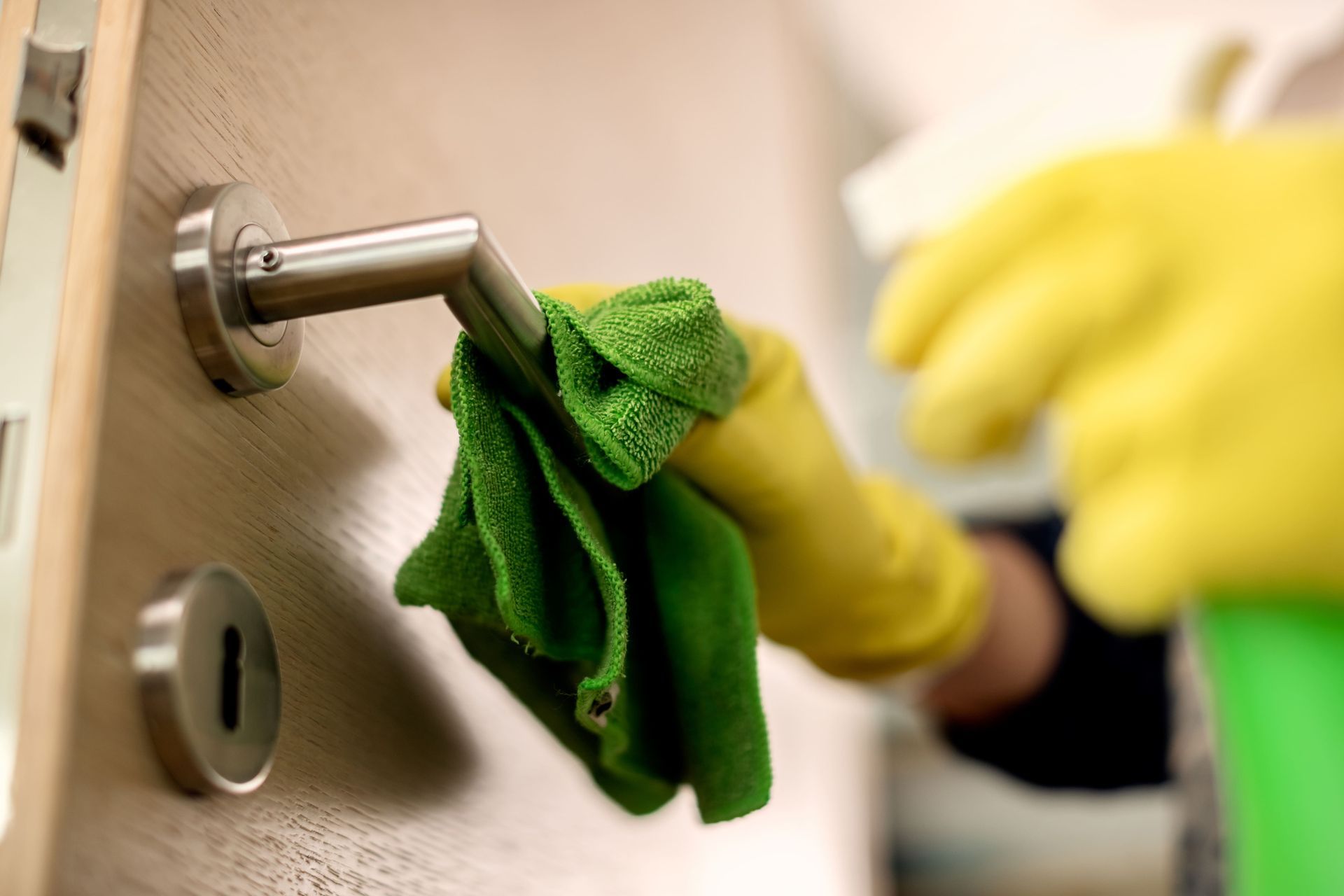
Focus heavily on the edges of cabinet doors where fingers grip the panels, as well as cabinet pulls and knobs where hand oils accumulate fastest.
Rinse lightly and dry immediately
Go over the cabinets one final time with a clean cloth dampened with plain water to remove any soapy residue, then buff completely dry with a soft towel.
What to do for sticky buildup around the stove
For stubborn, polymerized grease near the cooktop that won't budge with dish soap, mix equal parts baking soda and warm water into a gentle paste. Dab it onto the spot, let it sit for two minutes to soften the grease, and wipe clean with a damp microfiber cloth using feather-light pressure.
Products and tools to avoid
Abrasive pads
Steel wool, scouring pads, and magic erasers (melamine foam) act like micro-sandpaper. They will permanently dull cabinet sheens, scratch high-gloss coatings, and strip paint.
Harsh solvents
Avoid bleach, ammonia, turpentine, and heavy commercial oven cleaners. These harsh chemicals strip wood stains, dissolve glues, and burn paint finishes on contact.
Too much water
Saturating cabinet doors or letting water pool along the bottom rails causes wood to warp and laminate panels to delaminate over time.
How to keep cabinets cleaner longer
Weekly wipe-downs and range hood maintenance
Make it a habit to give your cabinets a quick, weekly wipe down with a damp cloth, particularly around the stove. Additionally, clean or replace your range hood filter every few months; a dirty range hood fails to capture grease vapors, forcing them to land on your cabinets instead.
When professional kitchen cleaning can help
Grease buildup, move-in cleaning, and recurring cleaning
Years of accumulated cooking grease across upper and lower cabinetry can become an exhausting, time-consuming chore to tackle alone. Partnering with a professional team like Star Maids Cleaning Solutions ensures your entire kitchen—from greasy cabinet faces to appliance exteriors—is safely detailed and restored.
Ready to bring your kitchen cabinets back to a brilliant, grease-free shine? Click here to get your custom quote from Star Maids Cleaning Solutions today!
FAQ
What removes grease from kitchen cabinets?
Warm water mixed with a few drops of grease-cutting dish soap is the safest and most effective solution for regular cabinet grease. For heavy, stubborn buildup, a gentle paste made from baking soda and water can lift grease without scratching the surface.
Can vinegar damage cabinets?
Yes, if used improperly. While diluted vinegar can help cut grease, frequent or full-strength application on painted, waxed, or natural wood cabinets can dull the finish and eat away at protective clear coats over time.
How do you clean sticky wood cabinets?
Clean sticky wood cabinets by dampening a microfiber cloth with warm water and a drop of dish soap, wringing it out until it is nearly dry, and wiping the surface gently. Never soak wood cabinets, and always dry them immediately with a clean towel to prevent water damage.
How often should cabinets be cleaned?
A quick surface wipe-down of high-touch cabinet handles and areas near the stove should be done weekly. A thorough, top-to-bottom cleaning of all kitchen cabinet doors and exterior panels is recommended every 1 to 3 months, depending on how often you cook.