
Bleach vs. Vinegar for Cleaning: When Should You Use Each?
When stocking your cleaning supplies, two household staples often take center stage: bleach and vinegar. Both are powerful liquids capable of transforming a dirty surface, but they operate on entirely different chemical principles. Confusing the two—or worse, attempting to combine them—can lead to poor cleaning results or dangerous chemical reactions.
Knowing when to deploy bleach and when to reach for vinegar ensures your home remains sanitary, sparkling, and chemically safe.
Quick answer: bleach disinfects, vinegar helps with mineral buildup
- Bleach (Sodium Hypochlorite): A powerful chemical disinfectant that kills bacteria, viruses, and mold spores on nonporous surfaces, and excels at whitening organic stains.
- Vinegar (Acetic Acid): A mild natural acid that excels at dissolving hard water mineral deposits, soap scum, and light grease.
Never mix bleach and vinegar
Never, under any circumstances, mix bleach and vinegar together. Combining an acid (vinegar) with a chlorine-based cleaner (bleach) triggers a dangerous chemical reaction that releases toxic chlorine gas, which can cause severe respiratory distress and eye irritation.
What bleach is best used for
Disinfecting approved surfaces
Bleach is primarily a sanitizer and disinfectant rather than a traditional dirt-cutter. It is ideal for high-risk areas where pathogen elimination is critical, such as sanitizing food-prep countertops (when properly diluted) or disinfecting high-touch door handles during a household illness.
Toilets and certain bathroom areas
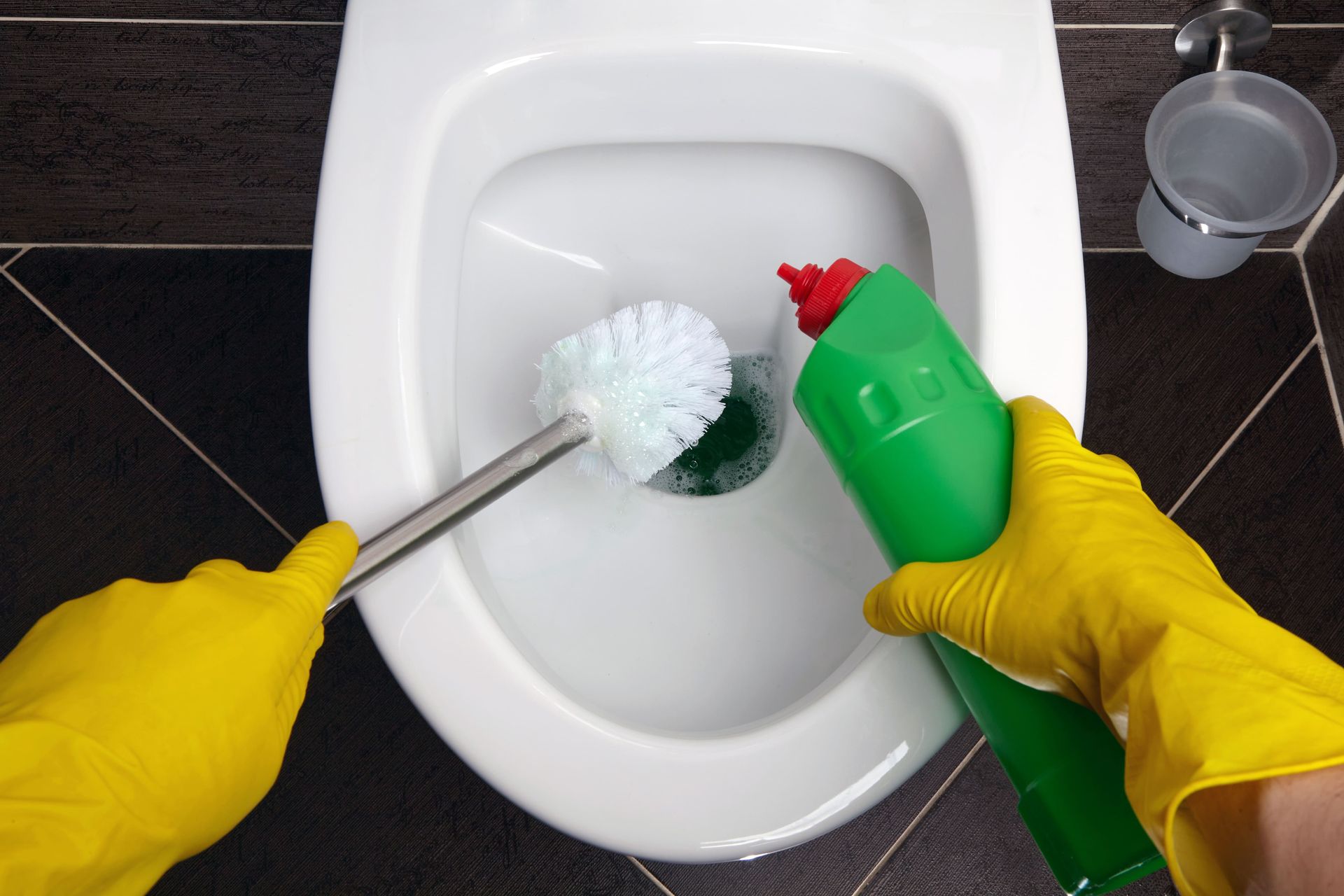
Bleach works exceptionally well for whitening porcelain toilet bowls and sanitizing damp bathroom surfaces where bacteria thrive.
Mold and mildew on nonporous surfaces
Because mold spores can trigger allergies and respiratory issues, bleach kills surface mold on nonporous materials like glazed tile, ceramic, and sealed fiberglass.
Why contact time matters
Bleach does not clean instantly on contact. To properly disinfect a surface, the bleach solution must remain visibly wet on the surface for the manufacturer's specified contact time (typically 3 to 10 minutes) before being wiped or rinsed away.
What vinegar is best used for
Hard water stains and mineral deposits
Because vinegar is mildly acidic (acetic acid), it acts as a natural solvent for alkaline buildup, easily dissolving calcium scale around faucets and hard water spots on fixtures.
Deodorizing some areas
Vinegar's mild acidity helps neutralize alkaline odors, making it useful for wiping out smelly microwaves, refrigerators, or plastic storage containers.
Glass and some bathroom fixtures
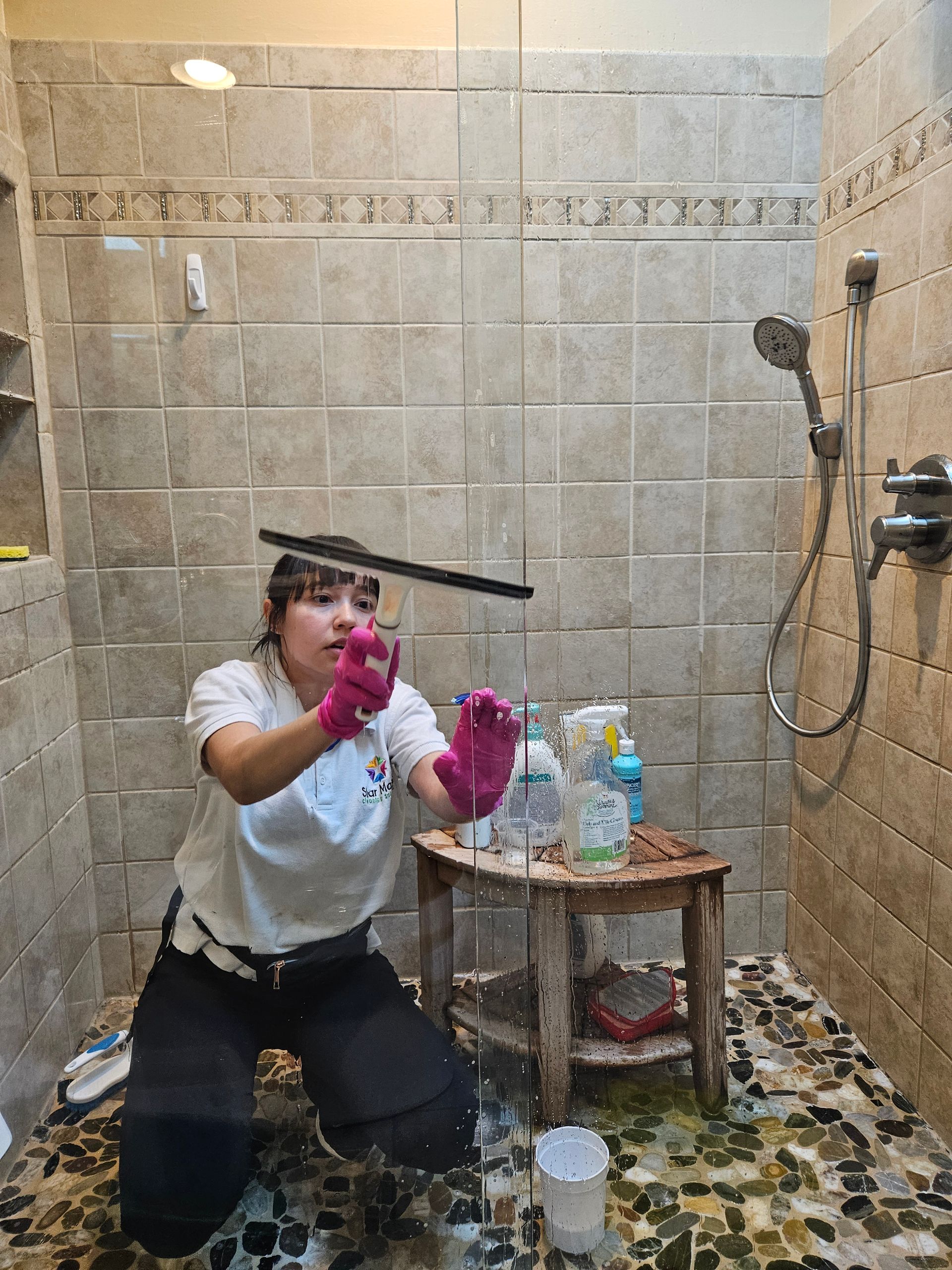
Diluted vinegar cuts through light grime on windows and glass shower doors, provided the glass is free of protective coatings that might react to acid.
Surfaces vinegar can damage
Never use vinegar on natural stone (marble, granite, travertine, slate), waxed wood, cast iron, or aluminum. The acid will etch, pit, and permanently dull these sensitive materials.
Bleach vs. vinegar by cleaning task
- Disinfection & Pathogen Killing
Bleach: Registered hospital-grade disinfectant that kills 99.9% of viruses and bacteria.
- Grout Whitening & Mildew
Bleach: Penetrates and oxidizes dark organic discoloration in porous materials.
- Toilets
Bleach: Whitens porcelain and sanitizes biological waste zones.
- Natural Stone Care
Neither (Use pH-Neutral): Acidic vinegar etches stone; harsh bleach degrades protective sealants.
- Shower Glass (Hard Water & Scum)
Vinegar: Dissolves alkaline mineral crusts and soap scum naturally.
Cleaning safety rules every homeowner should know
Read product labels
Always check manufacturer instructions for correct dilution ratios, especially when handling concentrated chlorine bleach.
Ventilate the room
Open windows and turn on exhaust fans when using any strong cleaner to prevent chemical fumes from concentrating indoors.
Wear gloves when needed
Protect your skin from harsh disinfectants and drying acids by wearing durable rubber or nitrile cleaning gloves.
Use one product at a time
Never combine cleaning agents. If you use vinegar in a bathroom, rinse the area thoroughly with water and let it dry completely before using any other product.
What to do if products are accidentally mixed
If you ever mix bleach and vinegar (or bleach and an ammonia-based cleaner), immediately leave the area, step outside into fresh air, and call poison control or emergency services if you experience coughing, burning eyes, or trouble breathing.
Professional cleaning recommendation
Match the product to the surface and goal
Professional cleaners understand that no single chemical solves every problem. They carefully match the cleaner to the surface material—using gentle, pH-neutral formulas for delicate stones, targeted acids for mineral scale, and safe disinfectants for high-touch hygiene. If you want your home expertly detailed without worrying about chemical safety or surface damage, Star Maids Cleaning Solutions provides professional-grade care for every room.
Ready to enjoy an impeccably clean, perfectly maintained home?
Click here to get your custom quote from Star Maids Cleaning Solutions today!
FAQ
Is bleach better than vinegar for cleaning?
It depends entirely on your goal. Bleach is superior for disinfecting pathogens and killing mold, whereas vinegar is superior for dissolving mineral deposits, soap scum, and hard water scale. Vinegar cannot kill all bacteria or viruses like bleach can.
Can vinegar disinfect surfaces?
While vinegar has mild antibacterial properties due to its acidity, it is not a registered disinfectant and will not kill dangerous pathogens like Salmonella, E. coli, or cold and flu viruses the way commercial disinfectants or bleach do.
Why is mixing bleach and vinegar dangerous?
Mixing bleach and vinegar causes a chemical reaction that releases toxic chlorine gas. Inhaling chlorine gas can cause severe respiratory irritation, chemical burns to the lungs, and eye damage.
Can you use vinegar on natural stone?
No. Vinegar is an acid that will chemically etch, pit, and permanently dull natural stone surfaces like marble, granite, and travertine. Always use a dedicated pH-neutral cleaner on stone.