
How often should offices be professionally cleaned
Employees notice a dirty break room or a dusty conference table faster than most business owners realize. Deciding how often should an office be cleaned is not just about appearances. It directly affects health, morale, and how clients perceive the business the moment they walk through the door.
This guide breaks down a realistic office cleaning frequency by business type, the signs an office is overdue, and how to build a commercial cleaning schedule that actually fits daily operations.
The short answer
Most offices need professional cleaning at least two to three times per week, with high-traffic spaces like medical offices, childcare facilities, and busy retail locations benefiting from daily service. Smaller offices with fewer daily visitors can often manage well with a thorough weekly clean, paired with light daily upkeep of shared areas like break rooms and restrooms.
The right frequency depends on foot traffic, number of employees, and whether the space serves clients or the public directly.
How often should an office be cleaned, by business type
Not every commercial space has the same needs. A few common scenarios shape how often professional cleaning makes sense.
Traditional offices
Standard offices with moderate daily traffic typically do well with cleaning two to three times per week. This keeps shared surfaces, restrooms, and common areas consistently presentable without paying for daily service the space does not need.
Medical and healthcare offices
Healthcare settings carry higher hygiene expectations, both from patients and from regulatory standards. Daily cleaning is standard for waiting rooms, exam rooms, and restrooms, with disinfecting protocols for high-touch surfaces between patient visits.
Retail and customer-facing spaces
Businesses with regular foot traffic from the public, such as retail stores or fitness centers, usually need daily attention to floors, entryways, and restrooms, since dirt and wear accumulate quickly with constant visitor turnover.
Small offices and co-working spaces
Smaller teams with lower daily traffic can often stretch to a thorough weekly clean, supplemented by daily trash removal and light tidying of shared spaces like kitchens and conference rooms.
Shared or multi-tenant buildings
Office suites that share entryways, elevators, or restrooms with other tenants tend to need more frequent attention to those common areas, even if each individual suite has lighter traffic. Coordinating cleaning schedules with building management or a property manager helps avoid gaps where no one is responsible for shared spaces.
Religious institutions and community facilities
Spaces that see irregular but high-volume traffic, such as weekend services or scheduled community events, often benefit from a cleaning visit timed around those events rather than a fixed weekday schedule. This ensures the space is ready right before it fills with people, rather than several days beforehand.
Signs your office needs more frequent cleaning
A few warning signs suggest the current commercial cleaning schedule is not keeping up:
- Trash cans overflow before the next scheduled visit
- Restrooms run out of supplies or show visible buildup between cleanings
- Dust accumulates visibly on desks, shelves, and electronics
- Employees mention odors in break rooms or restrooms
- Sick days increase noticeably during cold and flu season
- Carpets and floors show visible wear or staining faster than expected
If several of these apply, it is usually more cost-effective to increase janitorial service frequency than to deal with the productivity and morale costs of a consistently dirty workplace. Waiting until a client comments on a dusty lobby or a candidate notices an overflowing trash can during an interview is a more expensive way to discover the same problem.
What a professional commercial cleaning schedule typically includes
A well-built commercial cleaning schedule usually separates tasks into different frequencies:
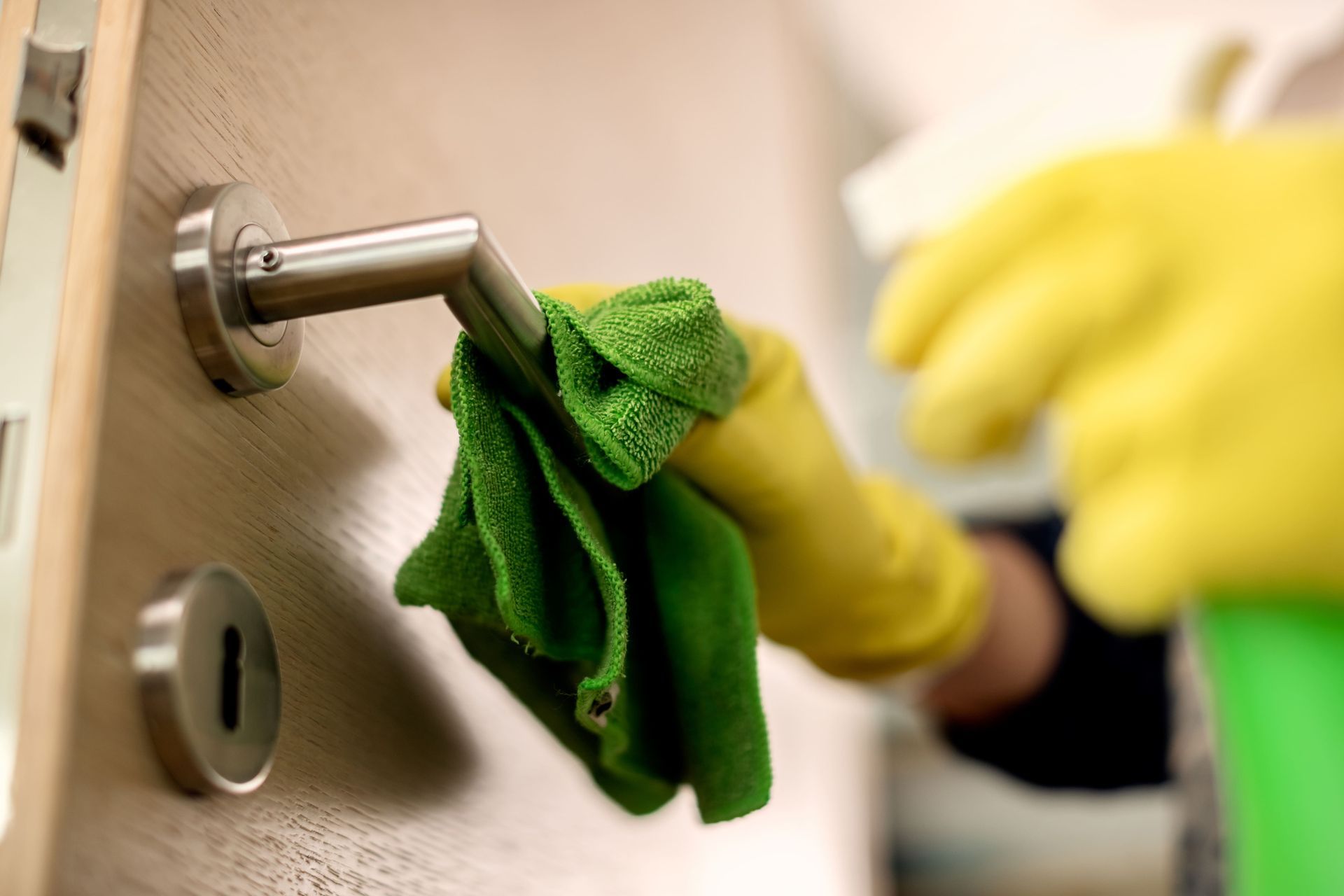
- Daily tasks: emptying trash, cleaning restrooms, wiping high-touch surfaces like doorknobs and light switches, vacuuming high-traffic areas
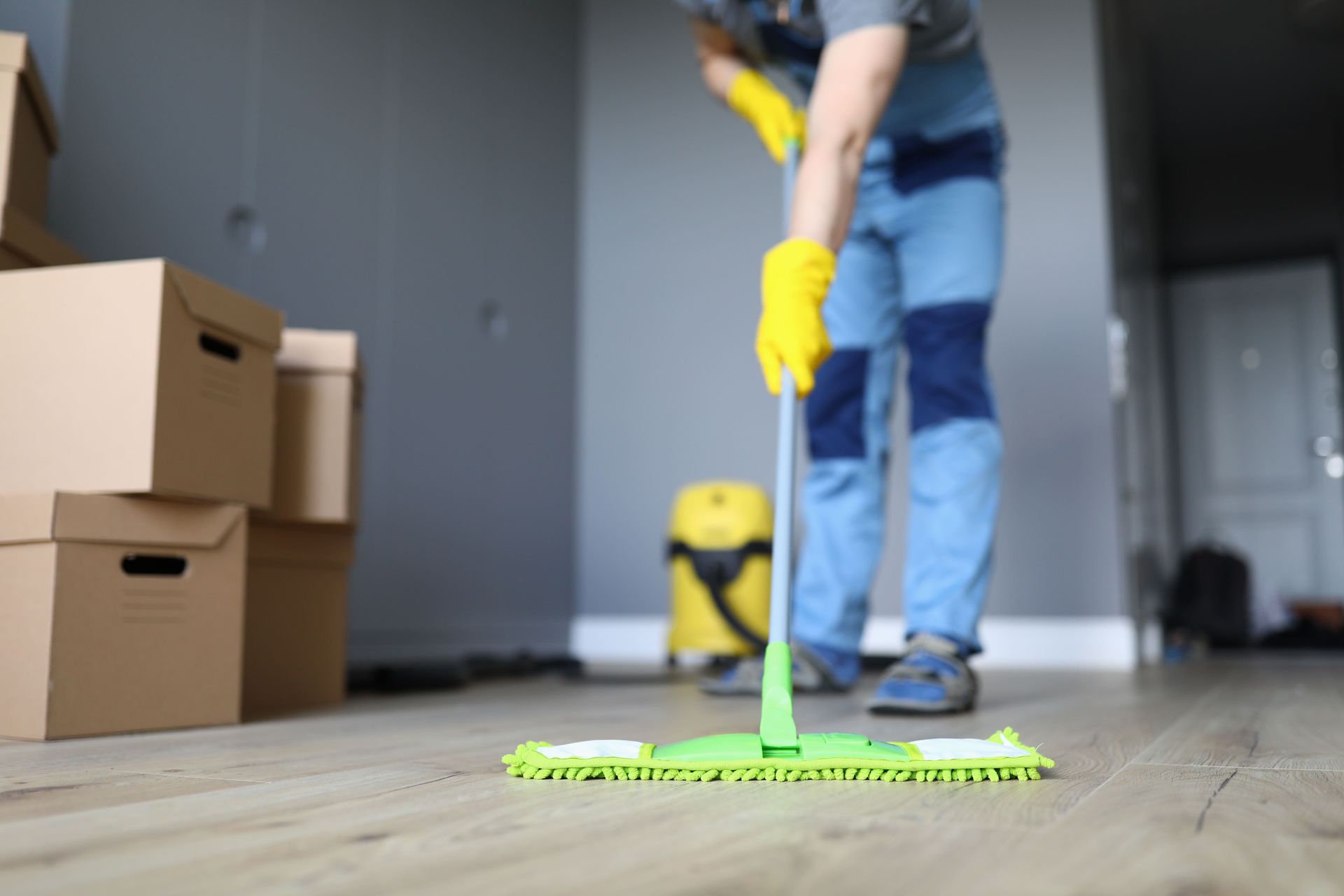
- Two to three times weekly: dusting desks and shelves, cleaning break room surfaces, mopping hard floors, restocking restroom supplies
- Weekly tasks: vacuuming carpets thoroughly, cleaning interior glass and windows, wiping down baseboards
- Monthly or quarterly tasks: deep cleaning carpets, dusting high or hard-to-reach areas, cleaning vents and light fixtures
Separating tasks this way keeps daily hygiene needs covered while reserving more time-intensive work for a less frequent, deeper visit.
Why office cleaning frequency affects productivity
Cleaning teams that service the same offices week after week tend to notice the same problem spots: break room refrigerator handles, shared coffee makers, conference room tables after back-to-back meetings, and the area around printers and copiers where foot traffic concentrates. These are exactly the surfaces that spread germs fastest in a shared workspace, which is why a consistent schedule matters more than an occasional deep clean.
A cleaner workplace does more than look better. Regularly cleaned surfaces, particularly shared items like keyboards, phones, and break room counters, reduce the buildup of germs that spread through a team quickly. Reducing this kind of surface contamination is one of the most direct ways cleaning frequency connects to fewer sick days and steadier attendance.
The Occupational Safety and Health Administration requires employers to keep workplaces clean to the extent the nature of the work allows, along with maintaining sanitary washing facilities and regular waste removal. Meeting these standards consistently usually requires a defined cleaning schedule rather than an as-needed approach, especially for businesses with shared restrooms or food service areas where sanitation expectations are higher.
Beyond health, cleanliness also shapes how employees and visitors perceive a business. A consistently maintained office signals attention to detail, which matters both for client-facing spaces and for employee morale over time.
Building a commercial cleaning schedule that fits your business
A practical approach usually follows these steps:
- Start by mapping daily foot traffic and identifying the highest-use areas, such as restrooms, break rooms, and entryways
- Assign daily tasks to those high-traffic areas, and less frequent tasks to lower-traffic spaces
- Schedule a deeper clean, covering carpets, vents, and hard-to-reach areas, on a monthly or quarterly basis
- Reassess frequency after any change in headcount, layout, or business hours
- Keep a simple log of completed tasks so gaps in the schedule are easy to spot
Professional janitorial teams often help design this schedule directly, since they can identify problem areas a business owner might not notice day to day.
What affects commercial cleaning cost
A few factors typically drive the cost of a commercial cleaning contract:
- Square footage: larger spaces take longer to clean thoroughly, which affects both time and price
- Frequency: daily service costs more in total than two or three visits per week, though the per-visit rate is often lower
- Type of space: medical offices and food service areas often require specialized disinfecting products and protocols, which can add cost
- After-hours service: cleaning outside business hours sometimes carries a premium, though it avoids disrupting the workday
- Add-on services: carpet shampooing, window washing, and floor stripping and waxing are typically priced separately from routine cleaning
Requesting a written quote based on an actual walkthrough of the space gives a more accurate picture than a flat per-square-foot estimate.
Common mistakes businesses make with cleaning frequency
A few habits tend to leave offices less clean than they should be:
- Setting a cleaning schedule once and never revisiting it as headcount or layout changes
- Assuming a small office needs less attention to restrooms and break rooms than it actually does
- Treating cleaning as a fixed cost to minimize, rather than a factor that affects sick days and morale
- Skipping deeper quarterly tasks like vent cleaning and carpet care until problems become visible
- Not communicating specific problem areas, such as a break room fridge or a high-traffic entryway, to the cleaning team
Addressing these habits usually costs less over time than dealing with the productivity losses of a workplace that falls behind on cleaning.
Frequently asked questions
How often should office restrooms be cleaned? Daily is standard for most offices, with high-traffic or customer-facing restrooms sometimes needing attention more than once per day.
Is daily cleaning necessary for a small office? Not always. Small offices with light daily traffic can often manage with two to three cleanings per week, plus daily trash removal and restroom checks.
Does office cleaning frequency really affect sick days? Yes, to a meaningful degree. Shared surfaces like desks, keyboards, and break room counters accumulate germs quickly in a shared workspace, and regular cleaning reduces that buildup before it spreads through a team.
What is the difference between office cleaning and janitorial service? The terms are often used interchangeably, though janitorial service sometimes implies a broader, ongoing maintenance contract, while office cleaning can refer to a single scheduled visit or task.
Should cleaning frequency change with the seasons? Yes, in some cases. Cold and flu season often calls for more frequent disinfecting of high-touch surfaces, while allergy season may call for more frequent dusting and vacuuming.
Can cleaning frequency be adjusted after the contract starts? Most janitorial providers allow adjustments as a business grows, moves to a new space, or changes hours, without requiring a completely new contract.
Is it better to clean during business hours or after hours? After-hours cleaning avoids disrupting employees and clients, though some businesses prefer daytime service for visibility and quick turnaround on spills or messes.
Keeping your workplace consistently ready
Finding the right office cleaning frequency comes down to matching the schedule to how the space is actually used, rather than applying a one-size-fits-all plan. A traditional office, a medical practice, and a retail storefront all have different baseline needs, and adjusting frequency as the business grows keeps the space consistently presentable without overspending on service it does not need.
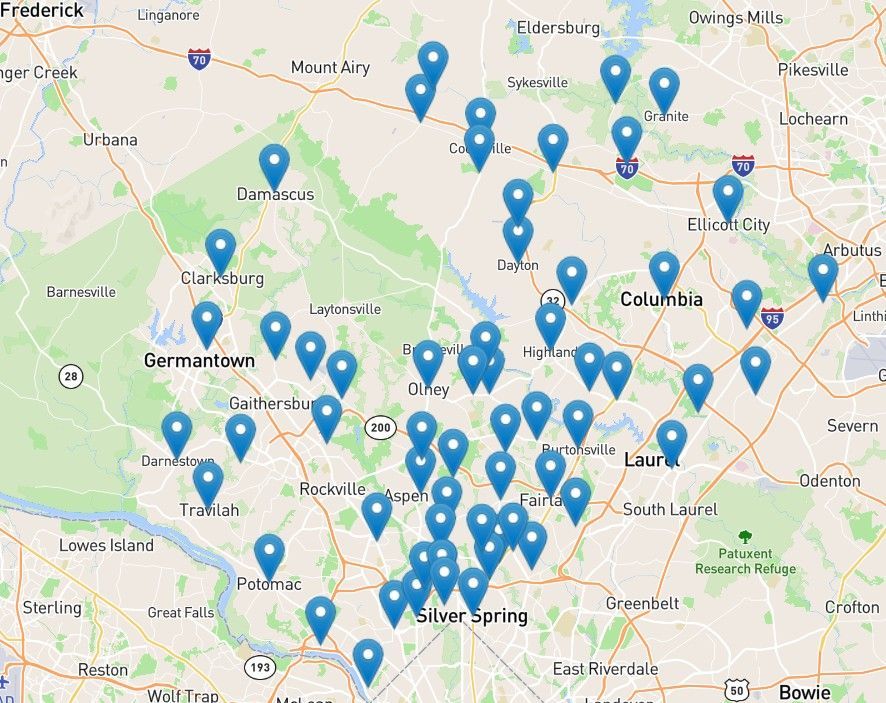
Star Maids' office and commercial cleaning services are built around this kind of flexible scheduling for businesses across Montgomery and Howard County, and our team can help map out the right frequency during an initial consultation based on your space and daily traffic. Whether the goal is meeting basic sanitation expectations or maintaining a consistently polished space for clients, the right schedule makes the difference between reacting to problems and staying ahead of them.